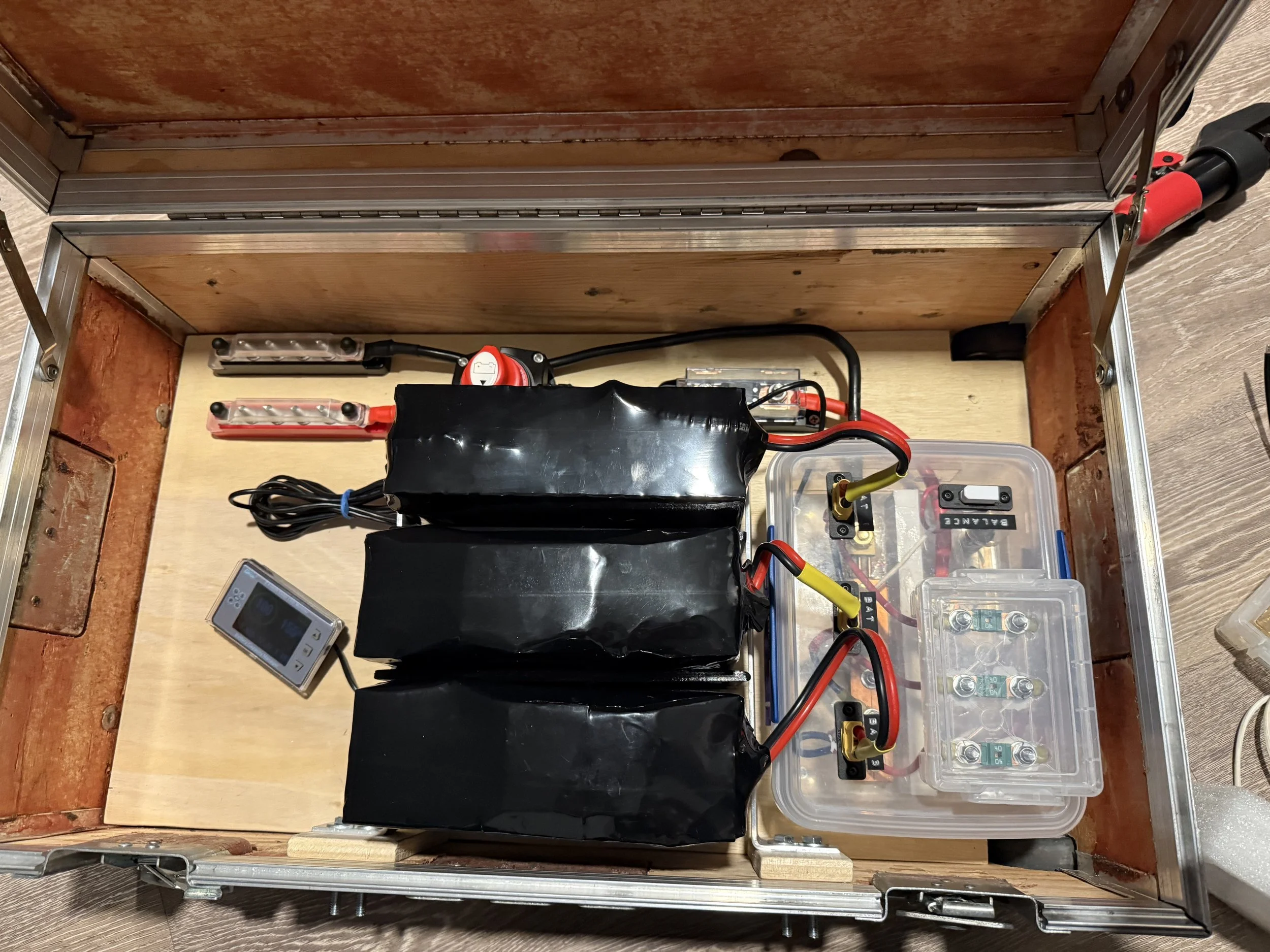
1.8 kWh Li-ion Power Station
High capacity portable power station built from 234 18650 cells. This project involved thorough testing of each individual cell, individual pack assembly and BMS integration, and full system assembly with four levels of safety. Developed as a cost-friendly alternative to commercial power stations.
Power Station Build
This project utilized 234 18650 lithium ion cells arranged into three packs, each in a 3s26p configuration. These packs have a combined capacity of 155 Ah or 1820 Wh, capable of charging a standard phone from empty to full 120+ times. The system uses a custom combining box featuring three XT-90 connectors for battery connections, a fourth XT-90 ran through a H7 headlight bulb for balancing a pack before connecting, three pack level fuses, and a 200A shunt for state of charge data.
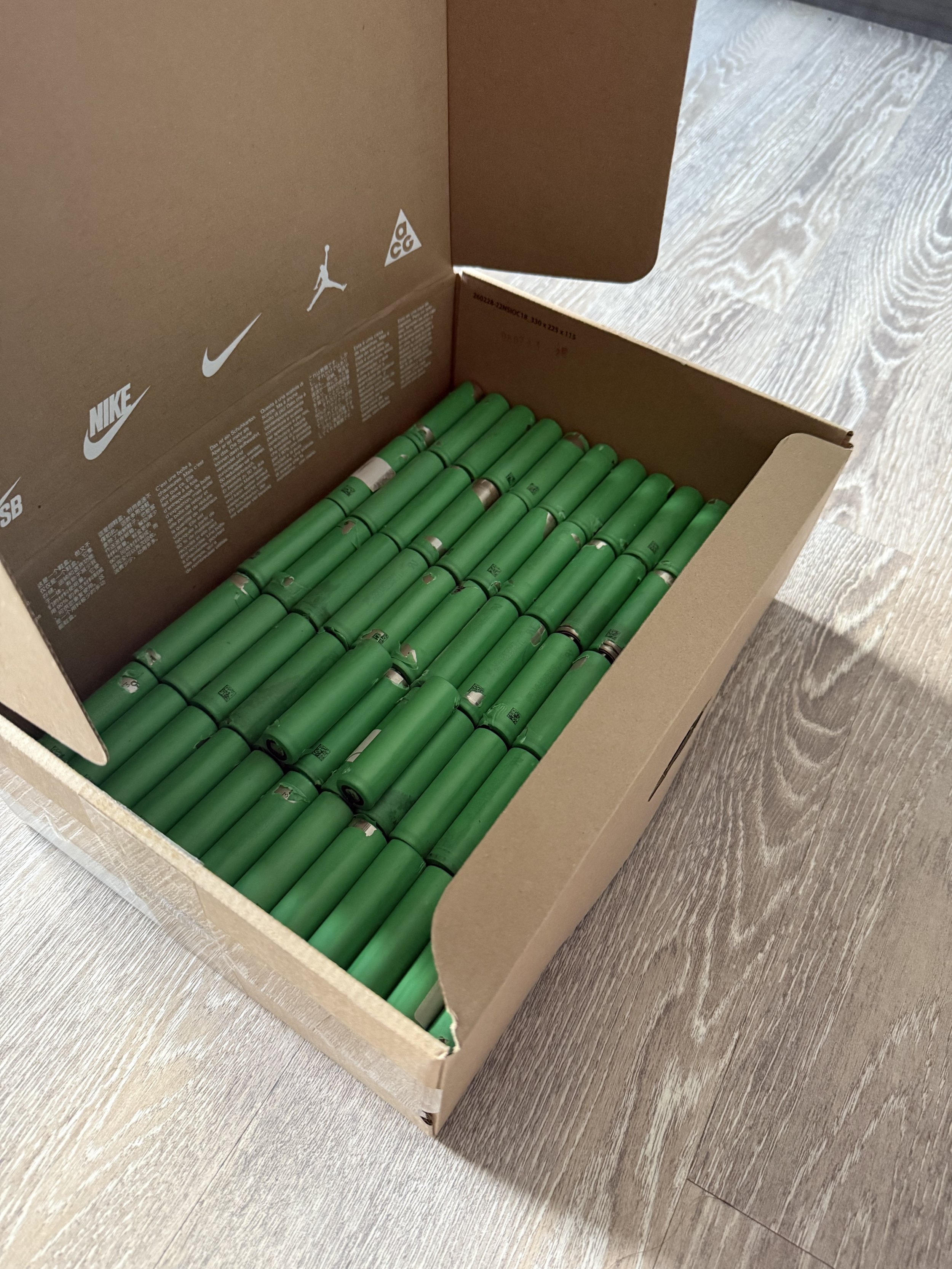
275 18650 cells bought from Facebook Marketplace. They were being stored unsafely in a shoe box, but luckily no damage had been done to the cells nor any fires started.
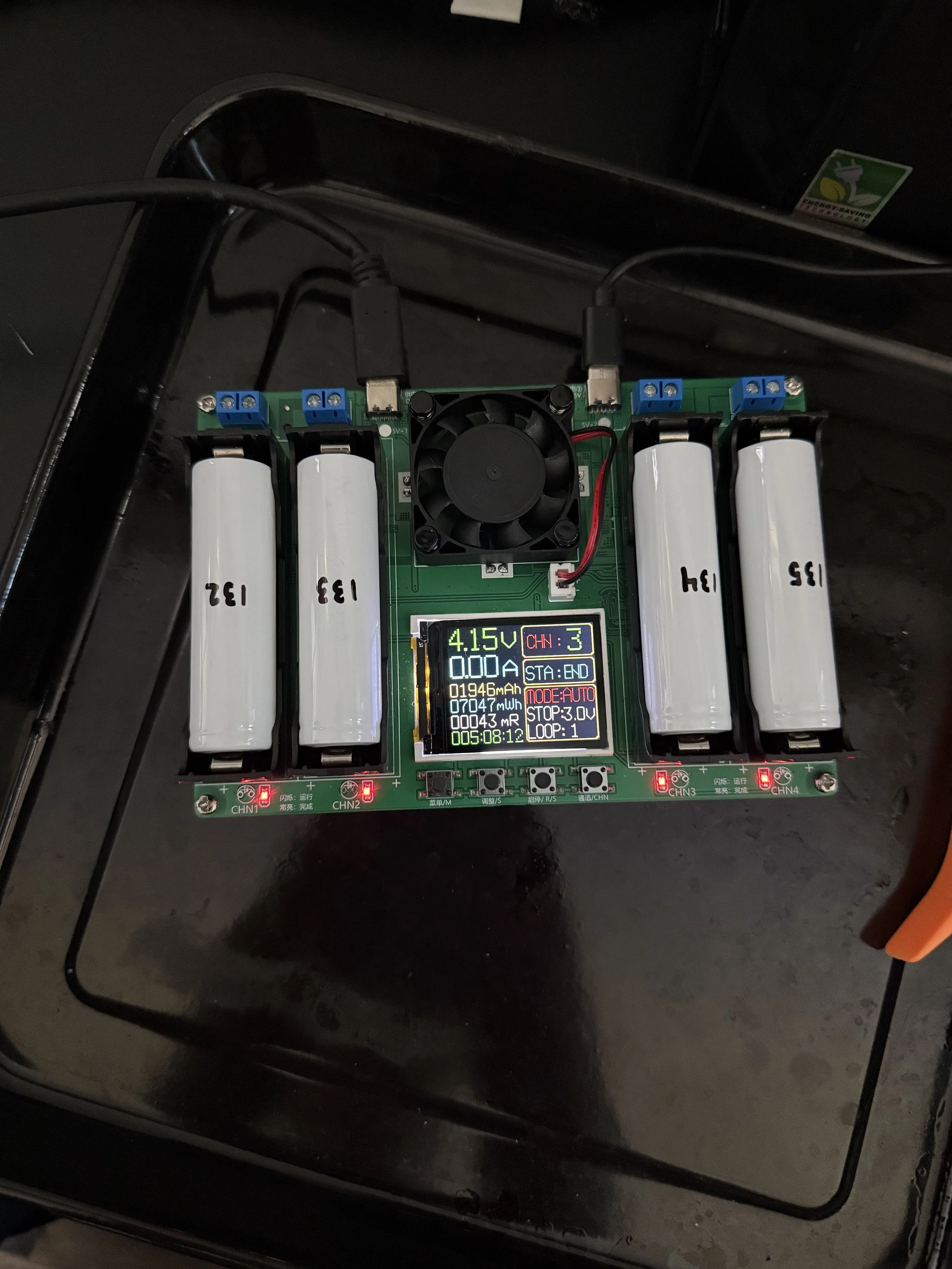
Each cell was tested individually to characterize its capacity and internal resistance. This took about 4 weeks to test them all, record the data, and properly dispose of the bad cells.
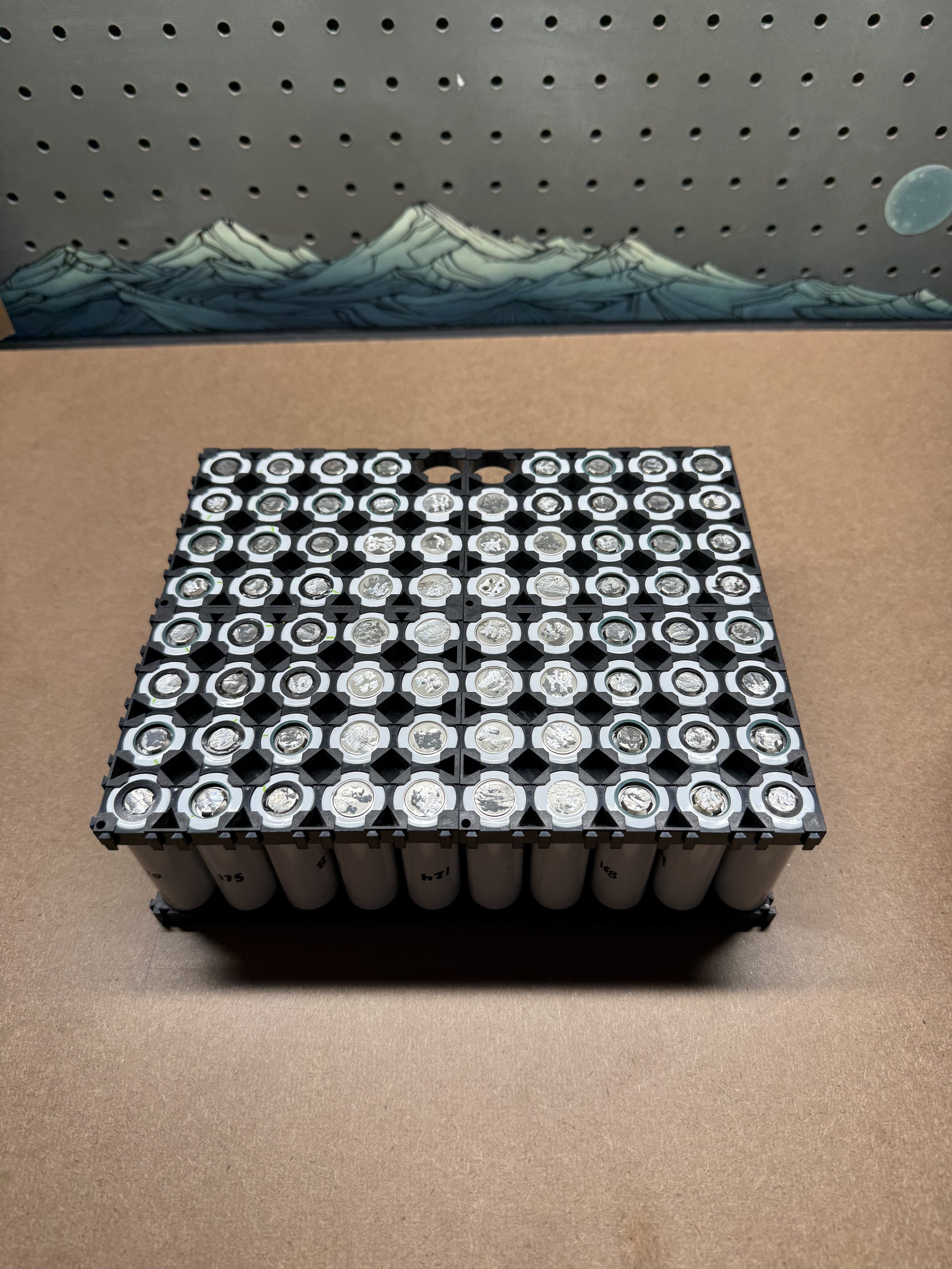
The cells could now be grouped properly using IR and capacity measurements, and the terminals could be cleaned and grinded to remove old spot welds.
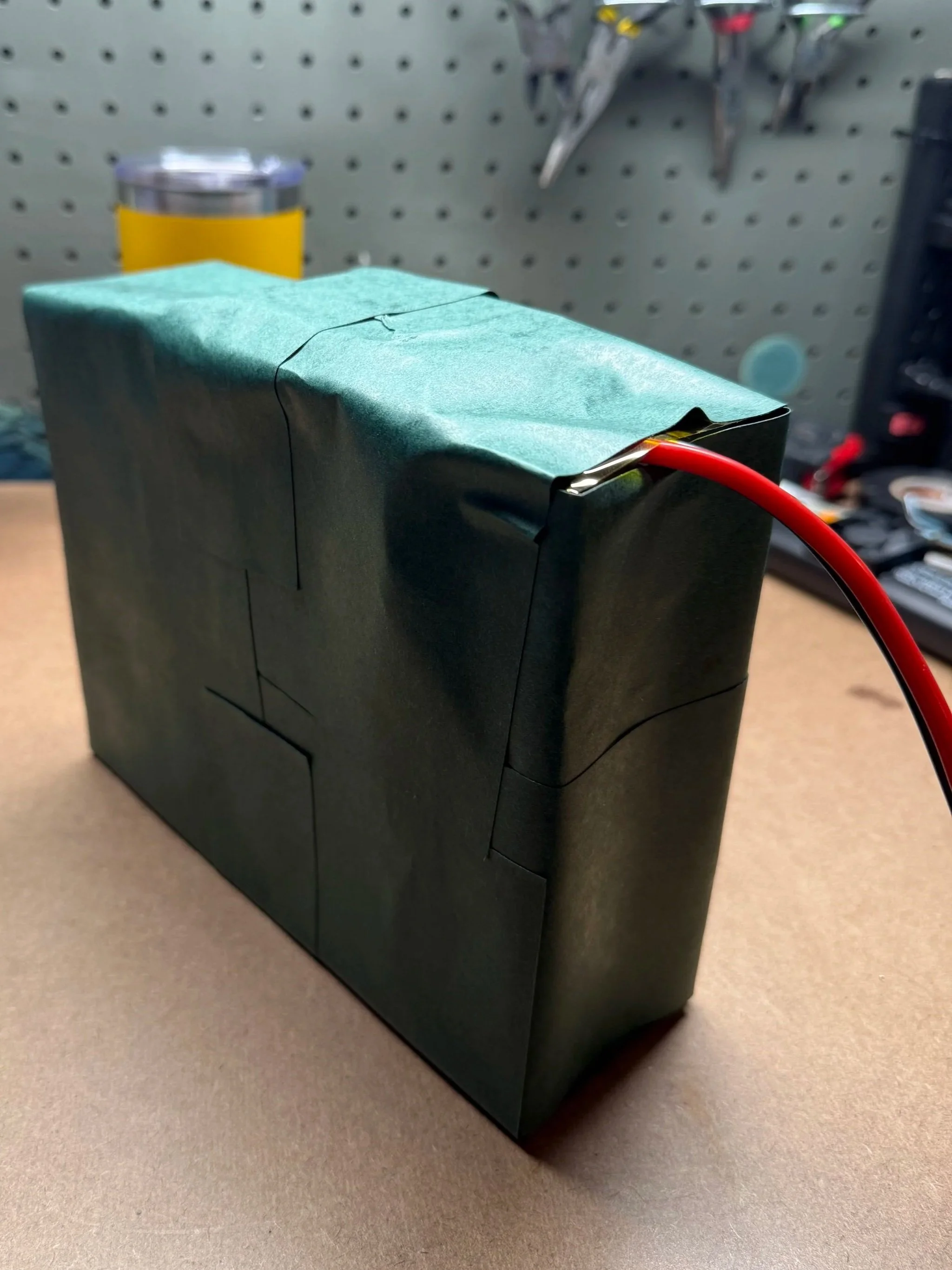
The packs were then insulated, protected, and finally shrink wrapped. Ready to be integrated with the rest of the power station build.
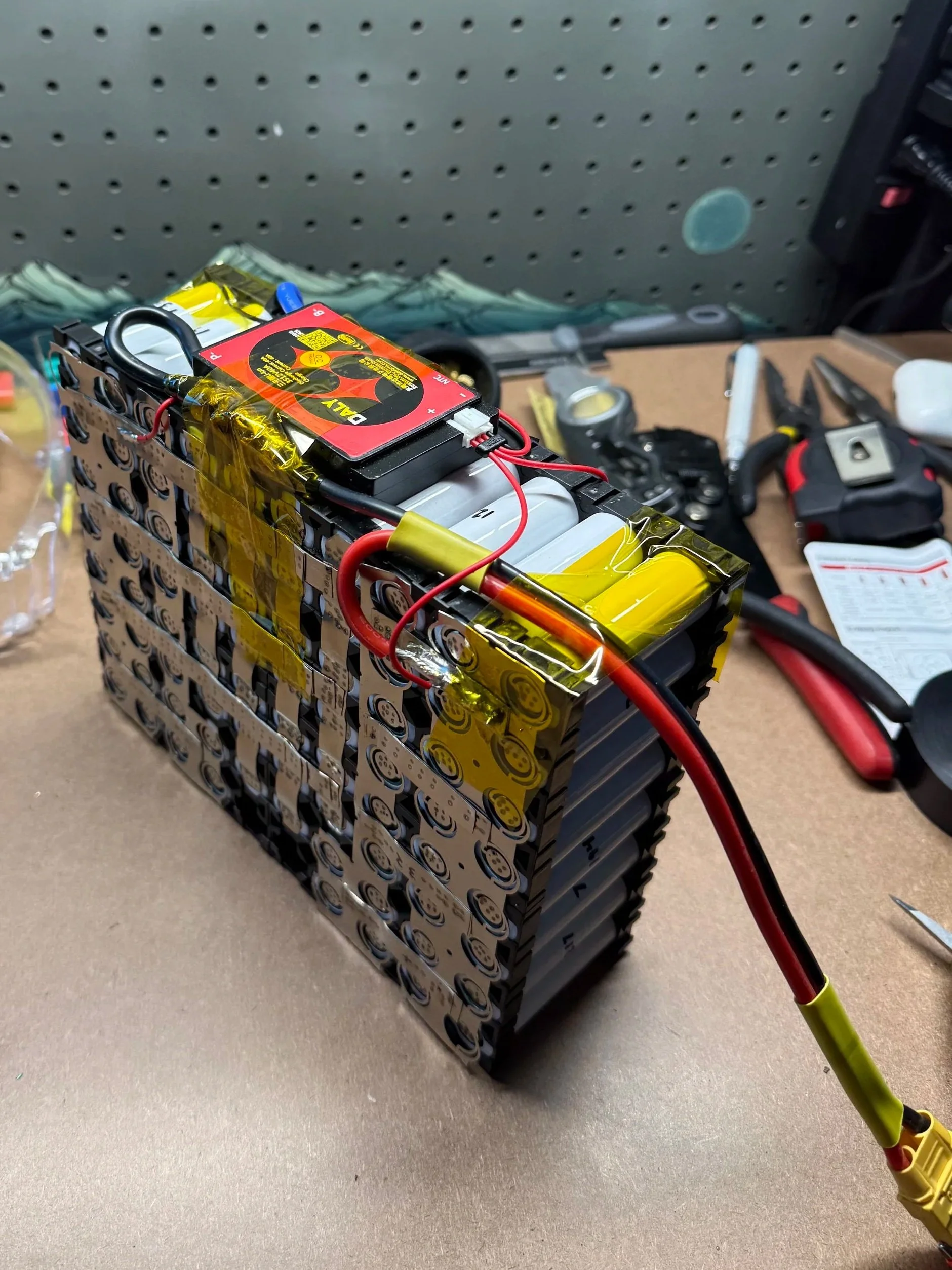
After balancing all the cells, the individual nickel fuses were spot welded to the positive terminal, nickel strips were spot welded to the negative terminals, and all parallel and series connections could be made. After this, the BMS could be properly wired, with all balance and power wires soldered, and the XT-90 connector attached.
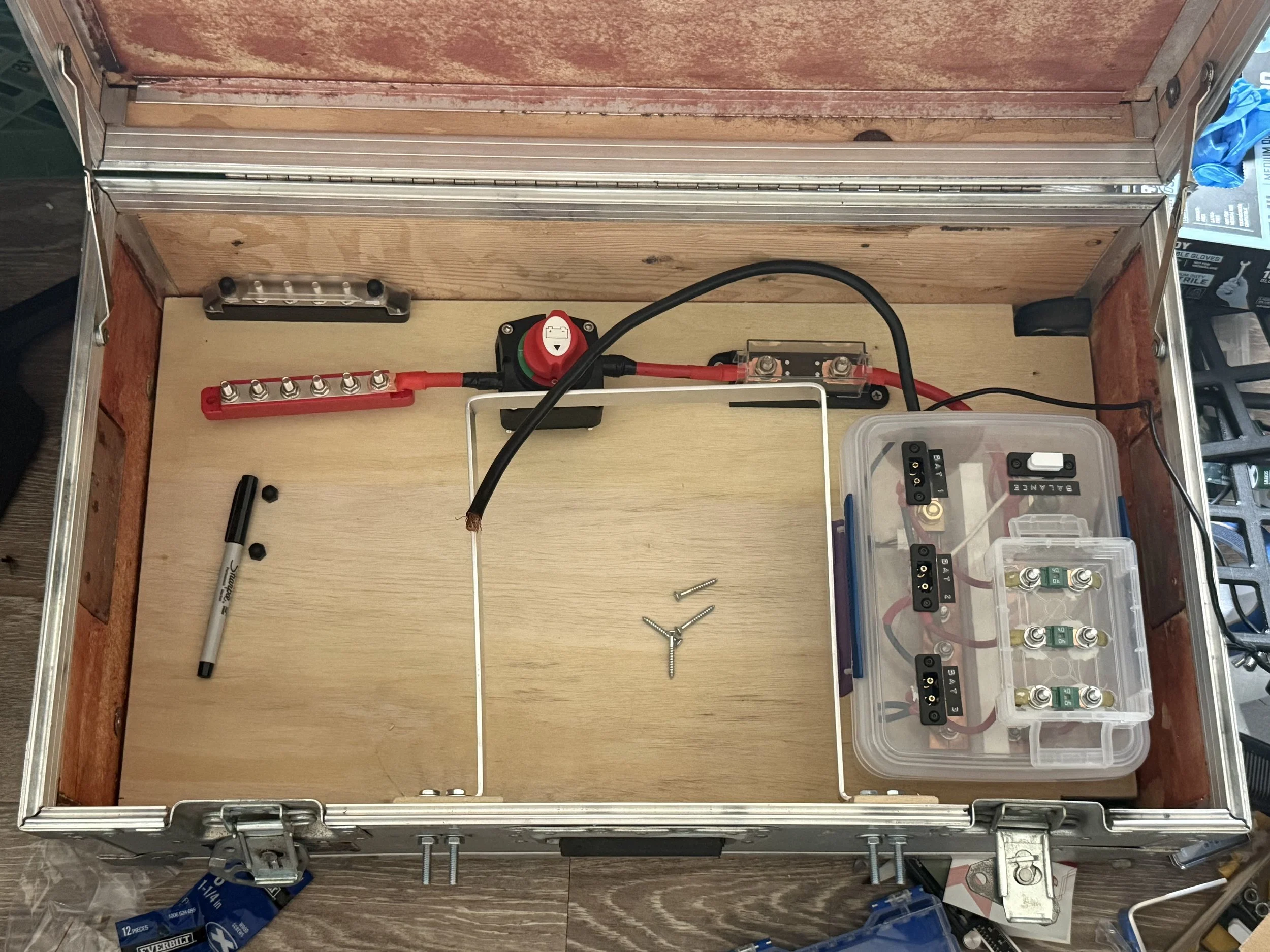
The combining and distribution challenge was by far the hardest within this project. Due to the high current capabilities, and strict built in safety I wanted, sufficient commercial combining boxes were far outside my price range, so I chose to manufacture one. I used copper bars with 1/4” bolts for the main bus bars, panel mount XT-90s, 40A pack level fuses, and a 200A shunt to track power draw and charging. This combining box then feeds into a 125A MEGA fuse, a battery disconnect switch, and finally to the output bus bars.
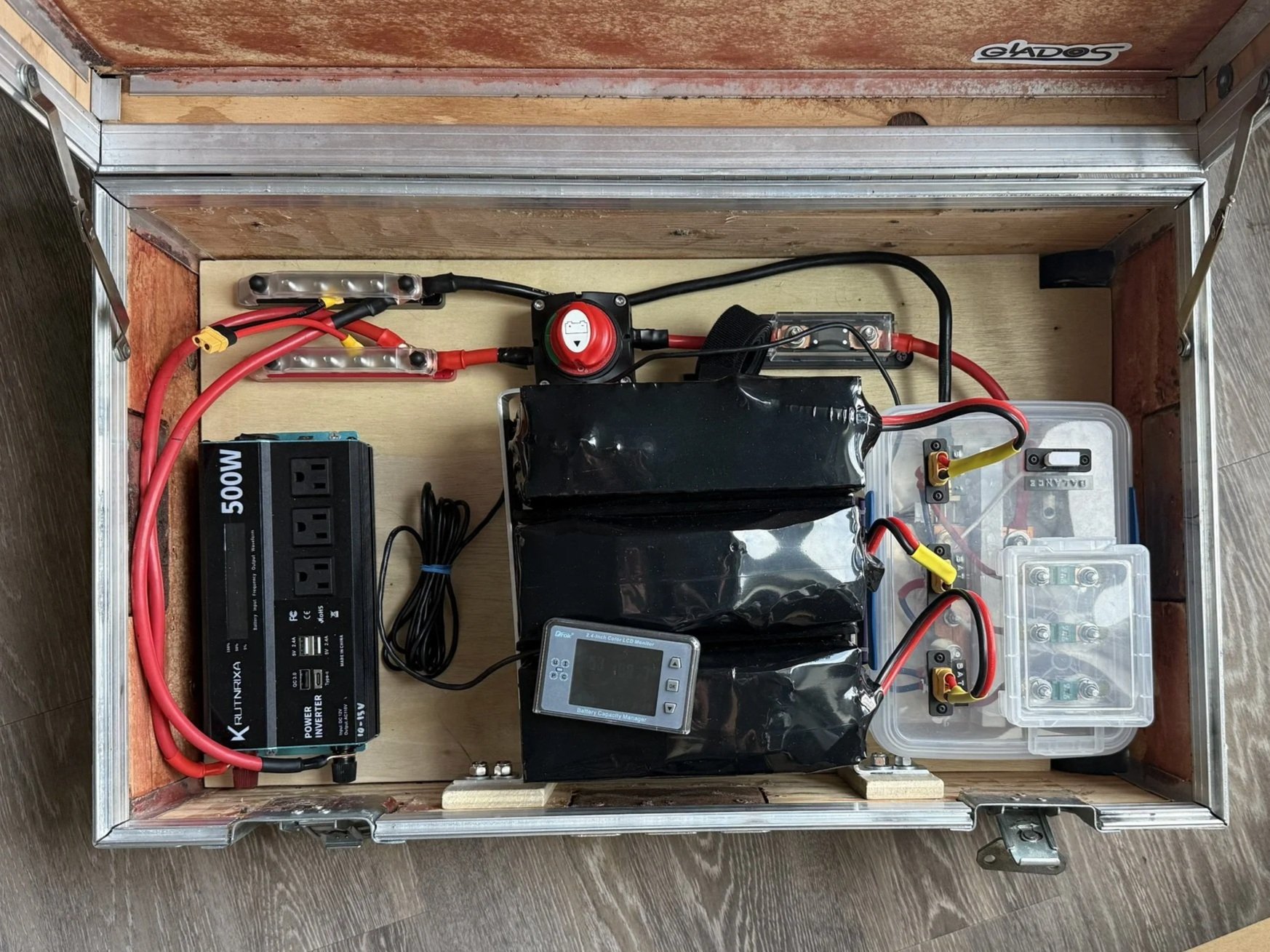
Finally, the three battery packs could be balanced using the balance connector, and connected to the rest of the system. A 500W AC inverter was added and wired so that the full system could be utilized.
In the future, I plan to add integrated charging using a solar MPPT charger, a DC-DC charger, and panel mount plugs, but currently these additions are outside of my price range. I also plan to upgrade to LiFePO4 batteries, as these are far safer than the Li-ion cells, but budget limitations made them unrealistic when the project started.